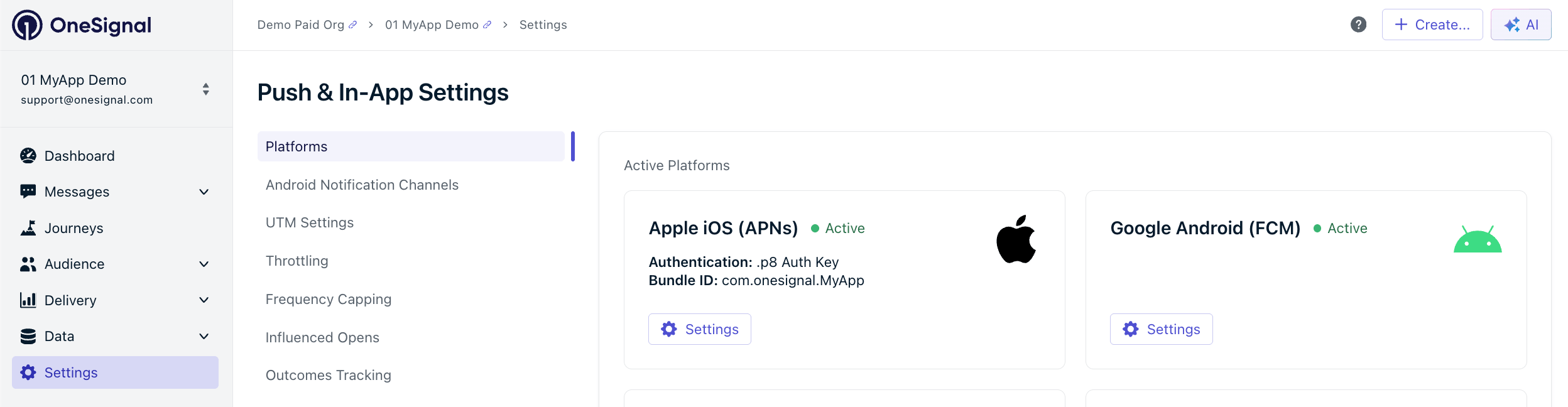
Configure Firebase Cloud Messaging (FCM) Service Account credentials in OneSignal to enable Android push notifications for apps on the Google Play Store.
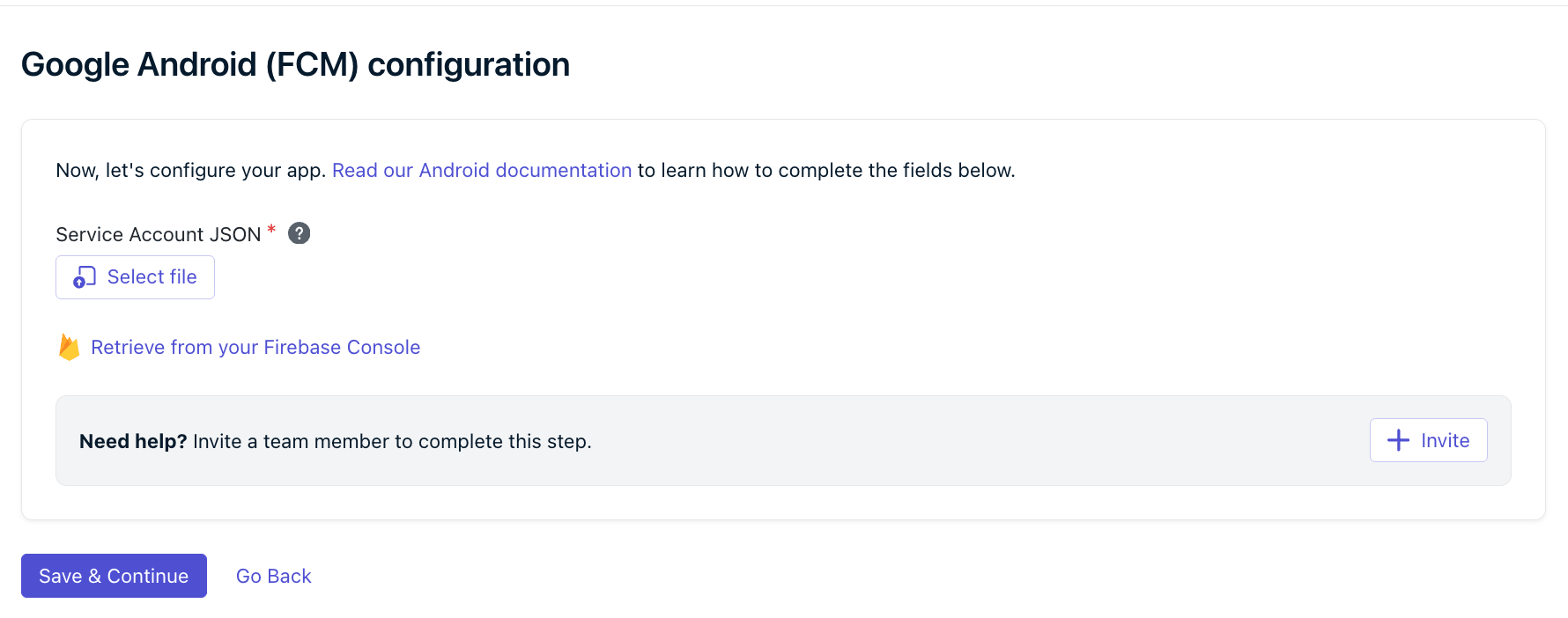
To send push notifications to users who download your Android app from the Google Play Store, you must create and upload a Firebase Cloud Messaging (FCM) Service Account private key to OneSignal.
These instructions do not apply to:
Web Push. Android devices can subscribe to your website or PWA without an FCM Service Account. See Web push setup.
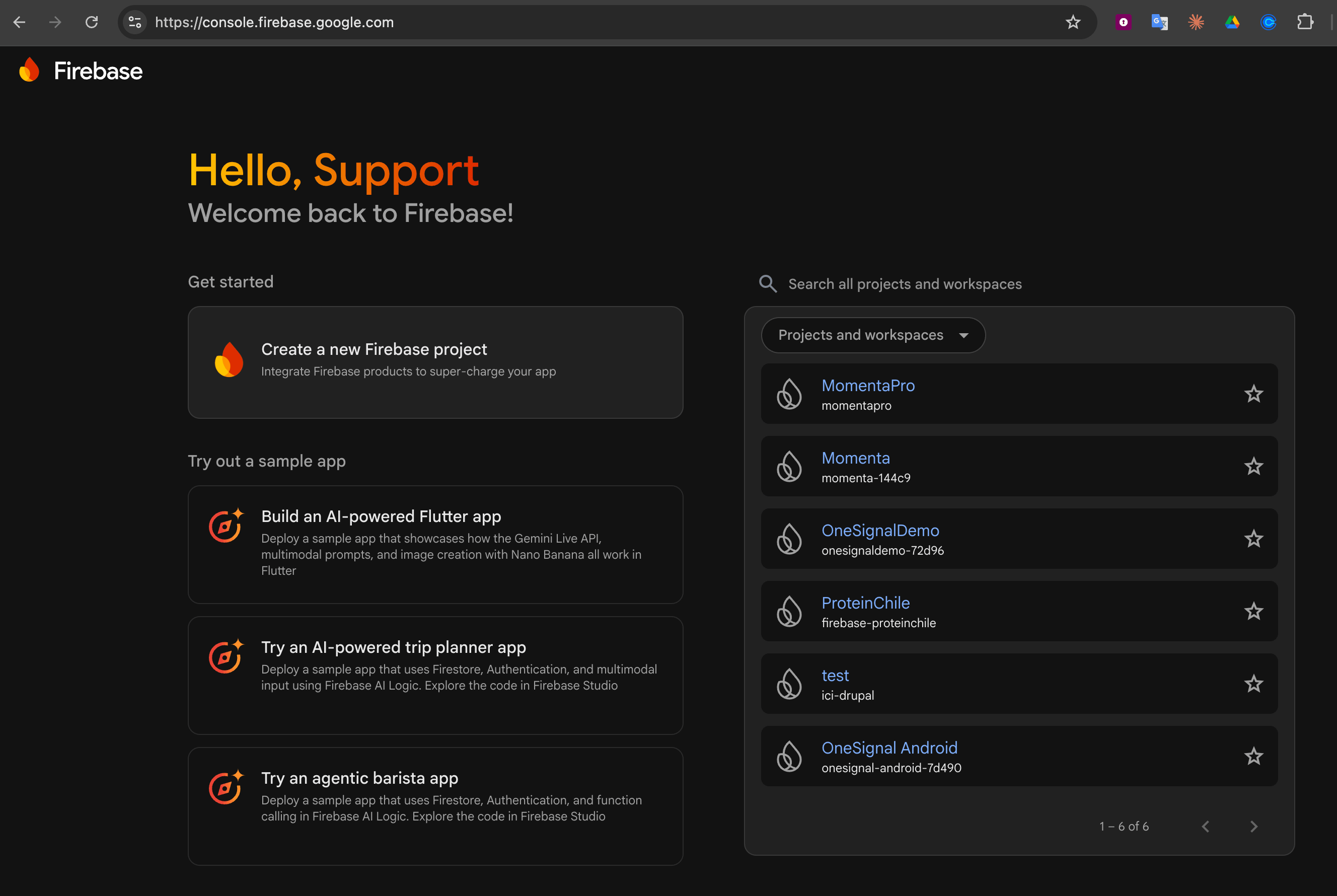
Go to your Firebase console and either create or select a project.
Page of Projects within Firebase
2
Enable Firebase Cloud Messaging API V1
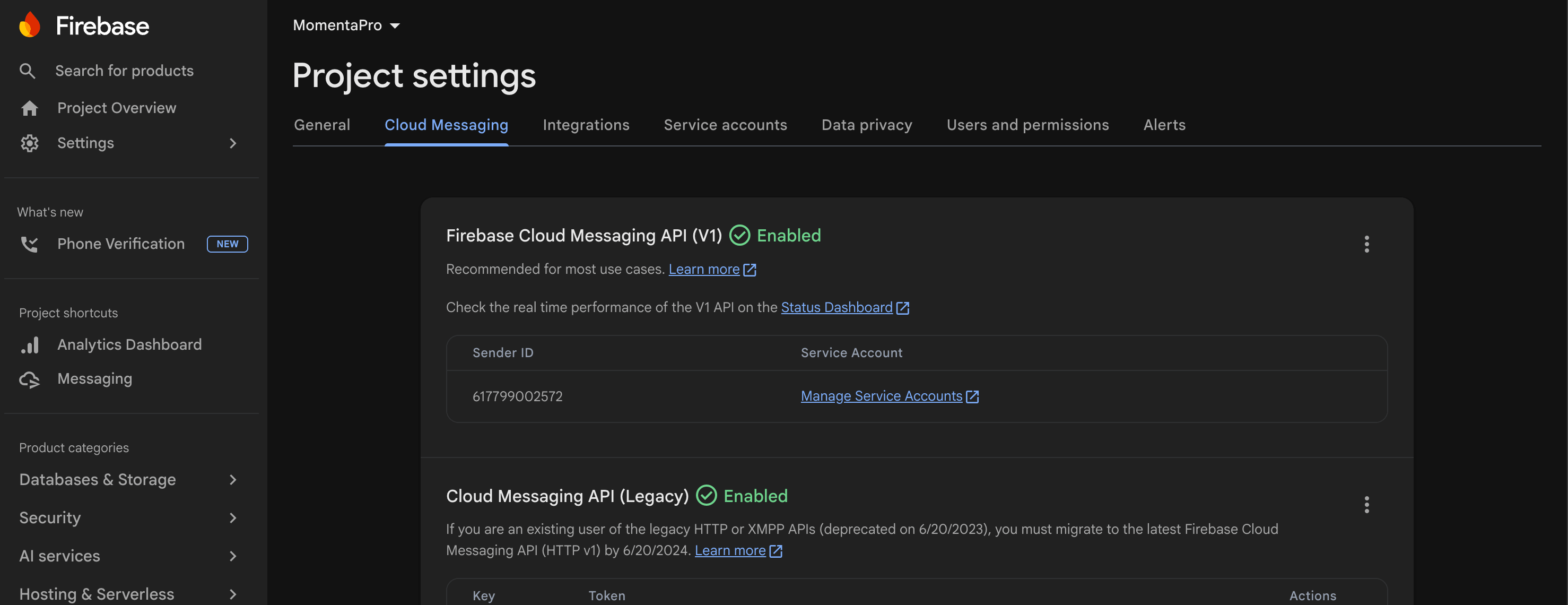
In Project settings, select the Cloud Messaging tab.
Cloud Messaging tab in Firebase Project settings
Check the Firebase Cloud Messaging API (V1) status:
If it shows Enabled (green checkmark), continue to the next step.
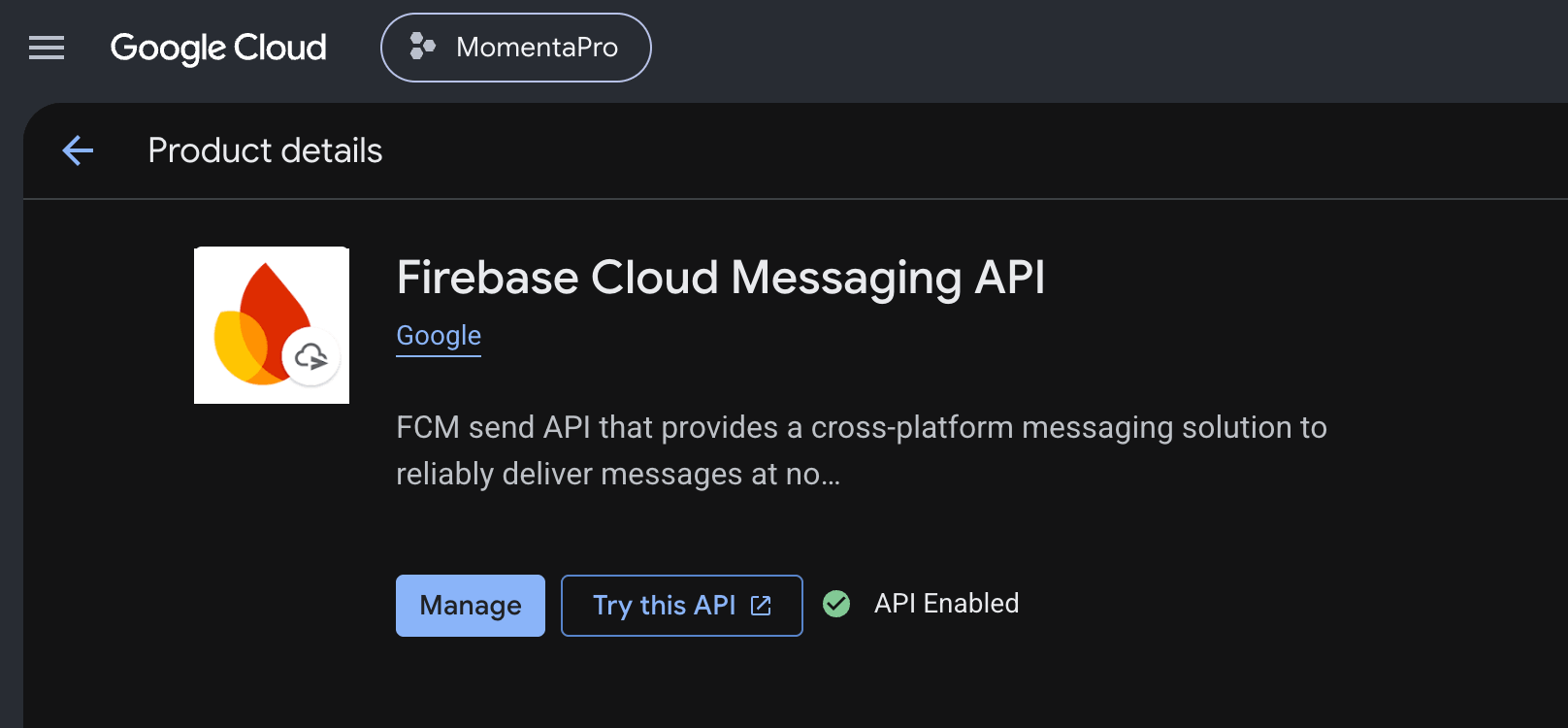
If it shows Disabled, click the 3-dot menu > Manage API in Google Cloud Console. In the Google Cloud Console, click Enable and wait for the green checkmark to appear with “API Enabled”.
Firebase Cloud Messaging API enabled in the Google Cloud Console
This is a good time to check if your Firebase Service Account has the required permissions:
cloudmessaging.messages.create
firebase.projects.get
Newly created Firebase projects usually have these permissions on the default Service Account. Check before continuing if you are unsure or working with an older project. See How do I check my Service Account permissions? for details.
3
Generate a new private key
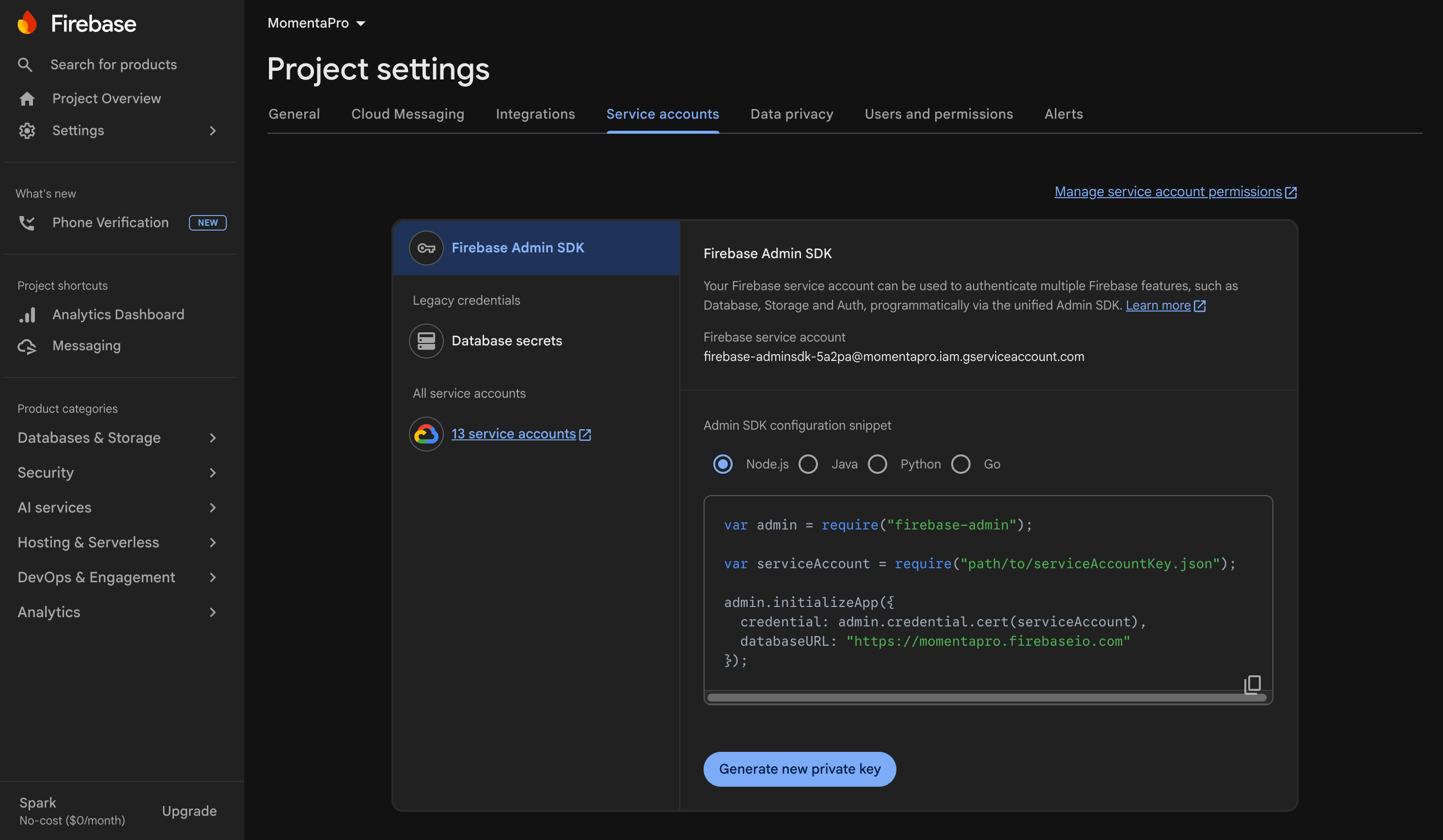
Back in Project settings, select the Service accounts tab and click Generate new private key.
Service Accounts section within Firebase
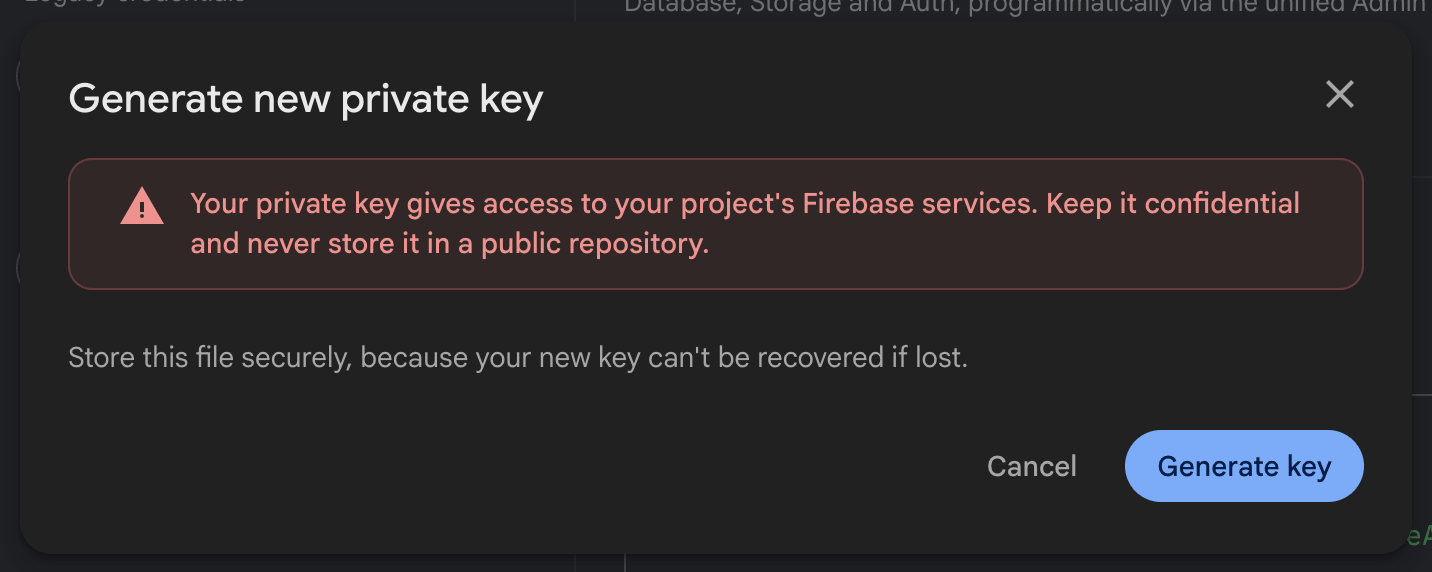
Confirm by clicking Generate key in the popup.
Generate the private key for the service account.
The downloaded private key contains sensitive credentials. Do not share it or check it into version control.
Save the .json file in a secure location. You will need it in the next section.
Your OneSignal app is now connected to Firebase Cloud Messaging (V1). Next, follow Mobile SDK setup for the SDK you are using to install and initialize OneSignal in your app.
Service Account permissions are managed in the Google Cloud Console, not the Firebase Console. The Service Account whose private key you upload to OneSignal must have both:
cloudmessaging.messages.create — granted by Firebase Cloud Messaging API Admin (roles/firebasecloudmessaging.admin).
firebase.projects.get — granted by Firebase Viewer (roles/firebase.viewer).
Broader roles like Firebase Admin (roles/firebase.admin), Editor, or Owner include both permissions and also satisfy the requirement. For OneSignal-only Service Accounts, prefer the narrow pair above to limit the impact if the private key is ever exposed.If the OneSignal dashboard shows Invalid request after you upload your Service Account private key, missing roles are the most common cause.
1
Open IAM in the Google Cloud Console
Sign in to the Google Cloud Console, select the project tied to your Firebase app, and go to IAM & Admin > IAM.
2
Find your Service Account
Match the principal email to the client_email field in your uploaded private key.
3
Add any missing roles
Click the pencil (edit) icon, then click Add another role to add either role if it is not already assigned.
4
Save
Click Save. IAM changes may take a minute to apply.
Why am I seeing “This configuration is for a different Firebase Project”?
This error occurs when the uploaded private key belongs to a different Firebase project (a different Sender ID).Solution: Use the original Firebase project’s private key. If unavailable, contact support@onesignal.com with your App ID. Switching projects resets push tokens. Your users must reopen the app to get push again.
If your Firebase server key looks like AIz..., you’re likely using an outdated Google Cloud Messaging (GCM) setup. Create a new Firebase project and upload a Service Account private key.
What is Firebase Cloud Messaging, and why does OneSignal need a Service Account private key?
Firebase Cloud Messaging (FCM) is Google’s service for delivering push notifications to Android devices. A Service Account is a Google identity that OneSignal uses to authenticate to your Firebase project, and its private key is a JSON file that proves the identity. Uploading the private key authorizes OneSignal to send pushes through Firebase on your behalf. For more details, see Google’s Service Account documentation.